![EDGJ.eu [small satellite technology, CubeSats, low-cost space missions, nanosatellite devOps]] logo](https://assets.zyrosite.com/cdn-cgi/image/format=auto,w=110,fit=crop,q=95/A85wKnnjWVtpq6Wx/edgj.io-m7Vwa0wJ8rH5B3yK.png)
Viability Assessment for an Engineering Consultancy (for ICT/SpaceTech Trainings) in Luxembourg
Feasibility
3/29/20252 min read
Strategic Analysis on the Feasibility of a Space Systems Engineering & ICT Consultancy in Luxembourg
Introduction
The global space sector is rapidly evolving, with Luxembourg positioning itself as a leader in NewSpace initiatives, ICT innovations, and satellite communications. This document presents a structured viability assessment of establishing a Space Systems Engineering & ICT Consultancy in Luxembourg, aimed at servicing private enterprises, research institutions, and governmental agencies.
Defining the Consultancy Scope
The proposed consultancy will provide expertise in:
Space Systems Engineering (Small Satellite Subsystems, RF Front-End Systems, Digital Twin Technologies)
ICT Training & Digital Transformation (5G/6G, AI-Driven SATCOM, Autonomous Ground Networks)
Project Management & Regulatory Compliance (ESA, EU Space Programs, ITU Regulations)
Strategic Business Advisory (Investment Analysis, Market Entry Strategies, R&D Funding Support)
The Importance of a Viability Assessment
A viability assessment ensures the consultancy's long-term economic sustainability, operational feasibility, and market positioning. The following key questions guide the assessment:
Is there a demand for specialized Space & ICT consultancy in Luxembourg?
What are the key competitive advantages and market differentiators?
Can the business achieve financial sustainability within a reasonable timeframe?
Market Demand Analysis
Luxembourg’s Competitive Advantage in Space & ICT
Home to Luxembourg Space Agency (LSA), SES, and a growing ecosystem of space startups.
Strong governmental support through Luxembourg’s Space Resources Initiative and public-private R&D incentives.
Increasing demand for telecommunication and digital infrastructure consultancy due to Luxembourg’s role in European space policy.
Economic Sustainability Factors
A viable business model requires:
Revenue Streams: Consultancy services, training programs, government contracts, and industry partnerships.
Operational Costs: Office infrastructure, personnel, software tools, and compliance expenses.
Financial Projections: Estimated breakeven within 2–3 years, leveraging Luxembourg’s R&D tax incentives and EU space funding programs.
Risk Assessment & Mitigation Strategies
Regulatory Risks: Engage with LSA, ESA, and EU regulatory bodies for compliance alignment.
Market Penetration Risks: Develop a strategic partnership network to secure early contracts.
Financial Risks: Secure funding through EU grants, private investors, and government-backed programs.
Financial Model & Implementation Plan
To ensure the consultancy's financial sustainability and smooth launch in Q3 2025, the following key actions are required:
Detailed Financial Model Development:
Define cost structure (office space, personnel, software tools, marketing, compliance fees).
Identify funding sources (EU grants, venture capital, government-backed loans).
Establish pricing strategy for services and training programs.
Forecast revenue generation and cash flow projections for the first 5 years.
Pilot Project Acquisition:
Engage with SES, LSA, ESA, and European space startups to secure initial consultancy contracts.
Offer proof-of-concept projects in SATCOM, digital twin technology, and AI-driven satellite operations.
Develop partnerships with universities and research institutions for funded projects.
Core Technical Team Establishment:
Recruit experts in satellite systems, ICT, and regulatory compliance.
Build an advisory board comprising industry leaders, policymakers, and investors.
Invest in continuous training to align with evolving space sector trends.
Conclusion & Strategic Recommendations
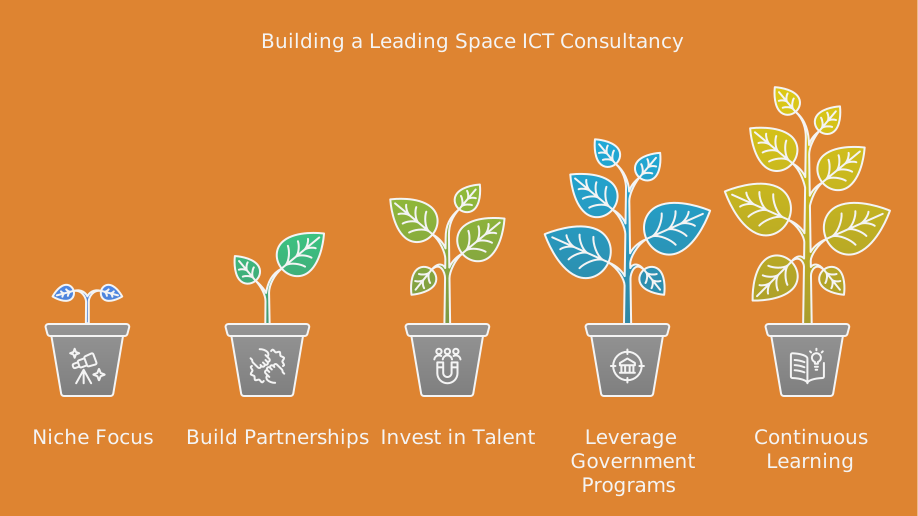
The feasibility assessment indicates a high potential for success, given Luxembourg’s strong space industry ecosystem and increasing demand for digital transformation in space communications. The consultancy must focus on:
Leveraging Luxembourg’s space & ICT funding ecosystem.
Building industry partnerships with SES, LSA, and ESA.
Offering specialized training & R&D services in AI-driven satellite operations, autonomous ground stations, and SATCOM technologies.